

Feasting on Culture
Palates and palettes...

Food and art blend together like books and stories, nourishing our senses with the richness of culture. Food culture carries the taste of our identity, while a work of art draws us into the imagination that lives within both a cuisine and its community.
A plate of food is a feast for the eyes and the palate, just as a painting, drawing, or photograph nourishes our sight and our mind through colour, depth, and flavour that give artistic flair to every unfolding story. I have recently discovered collage as an art form that allows me to express my narratives through a medium that is both creative and deeply therapeutic.
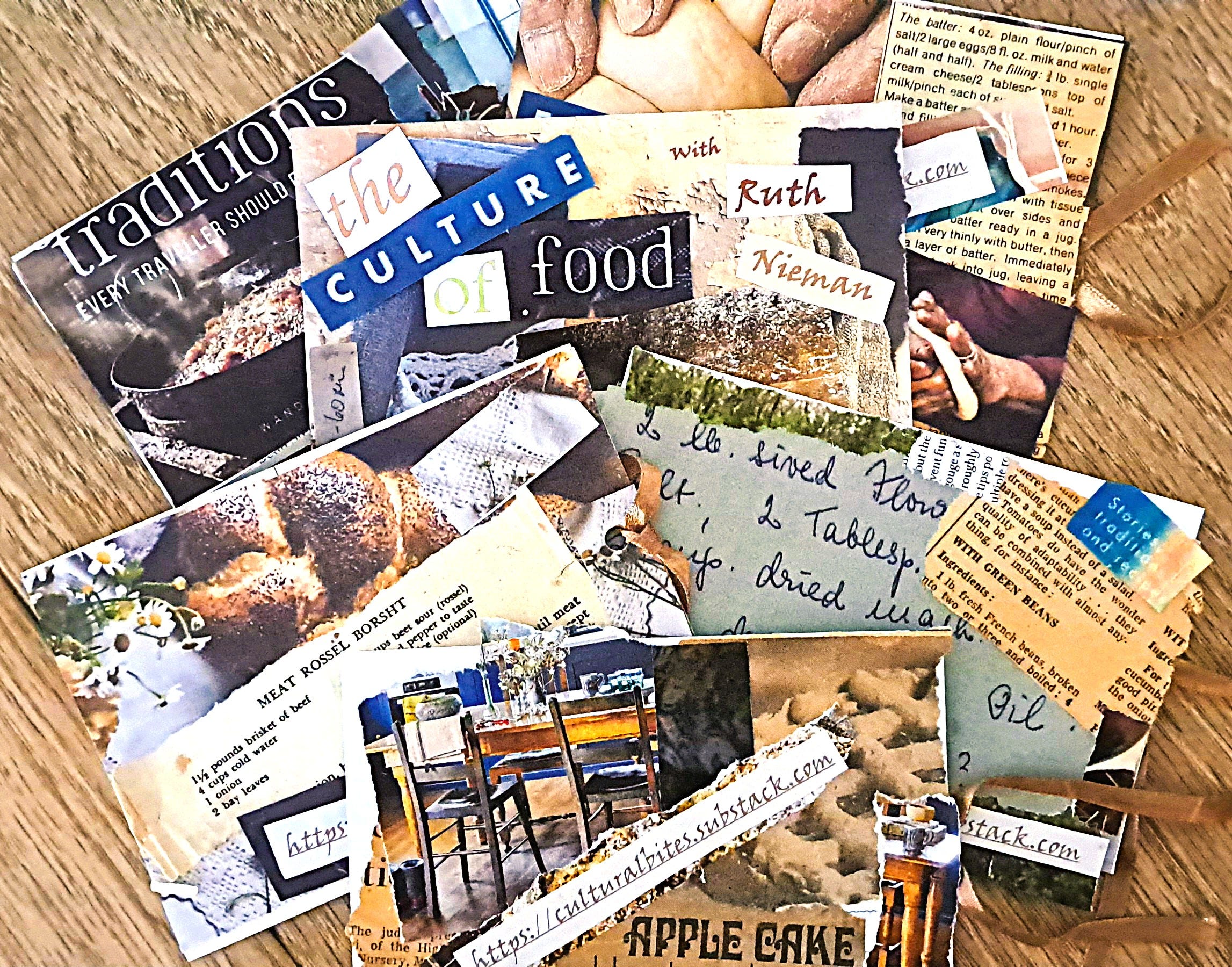
Last weekend, after enjoying Tel Aviv’s rich and vibrant cultural scene of food, exhibitions, and art-filled galleries, I began a run of talks exploring the theme of food culture that weaves through my books. Increasingly drawn to the stories behind food, the people who prepare it, and the places it comes from, I believe that cookbooks offering personal narrative, memories, and context are far more engaging than those that are simply collections of recipes. This has always been the inspiration behind The Galilean Kitchen, Freekeh Wild Wheat & Ancient Grains and my new publication due out this autumn, Nourishing the Jewish Soul.
We can all make a delicious pan of chicken soup, yet each bowl tells a different story, rooted in memory, landscape, and tradition. My Grandfather Used to Say, an exhibition I visited at the Dvir Gallery featuring nine artists working across sculpture, painting, and photography, reflects on the fragility of memory through many different mediums. The stories behind the art in this gallery resonated deeply with my writing, sparking renewed inspiration to bring the two together.
Many years ago, while holidaying in Aix‑en‑Provence, I was recommended a restaurant by my father where the signature dessert was inspired by the chef’s imaginative interpretation of Cézanne’s painting palette.
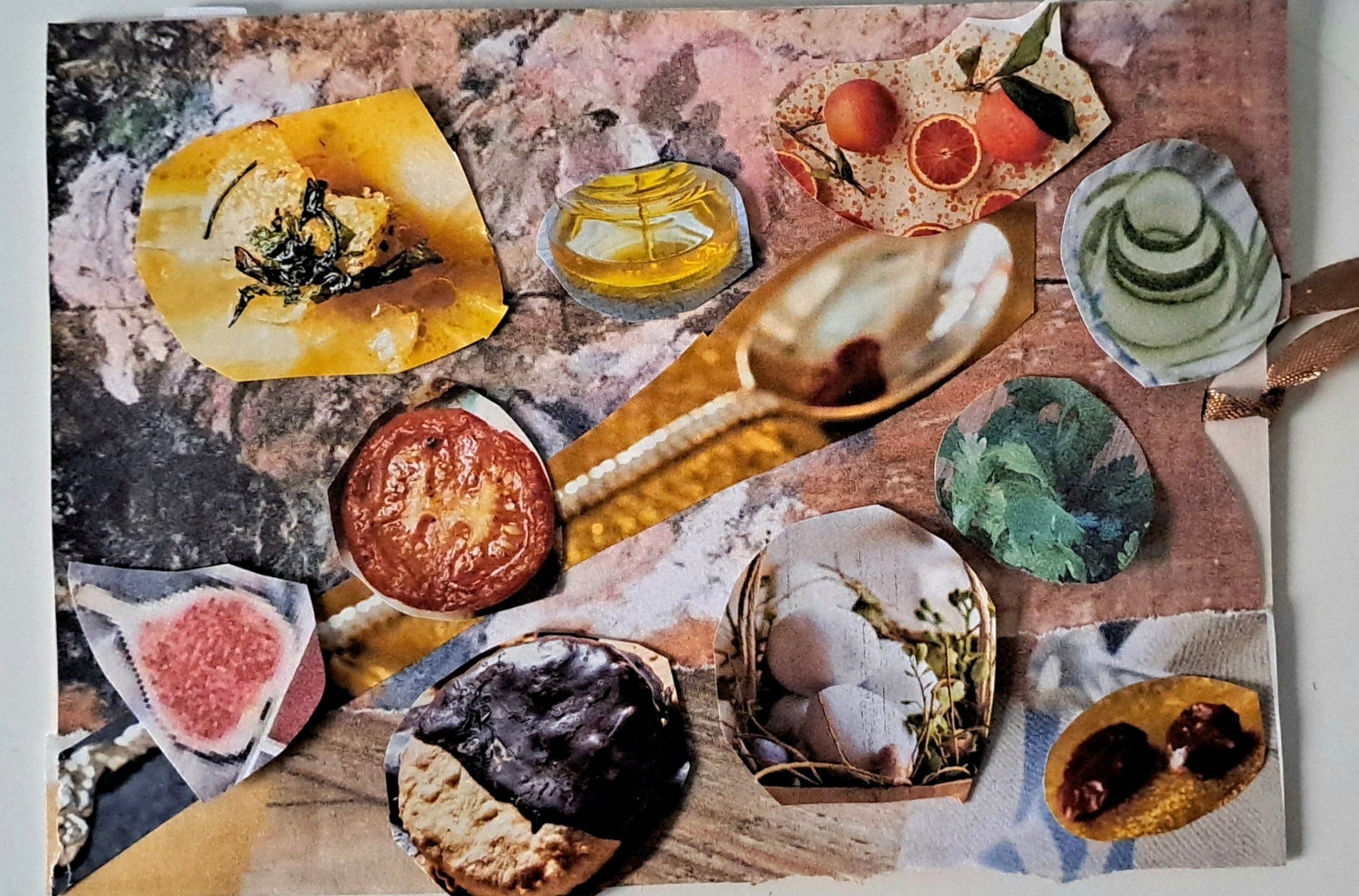
I can still picture the dessert: a golden, oval biscuit taking centre stage, its perfectly cut thumb‑hole echoing the place where Cézanne would have held his palette. Lightly dusted with icing sugar, a delicate brush lay beside it, while splashes of red, yellow, orange, blue, green, purple, and white, made from fruit coulis, creams, and jams were smeared across the plate like strokes of paint. It was as if the chef had created an edible work of art, one that tasted every bit as good as it looked. Although not in the same league, it was from this memory that I created a collage of an edible palette, one that conjures the colours, richness, and flavours of an artistic plate of food.
Exploring how communities express their identity through food is the essence of my writing, collage, talks, and my next book. Bringing people together through food, sharing our tables, preserving history, and honouring the memories of the matriarchs who nourish us with tradition, offers a rare neutral space in what has become an increasingly divided world and allows us to glimpse how food and art preserve memory and give us the tools to express ourselves in ways that sustain us and restore the body, mind, and soul.